


Fellow Citizens of Mount Pleasant,
This is one of the most talked-about developments in our town—and it’s important that everyone has the facts. No spin. No confusion. Just a clear explanation of where things stand, how we got here, and what our options are.
1. Background: How We Got Here
- In 2019, the developer entered into a legally binding Development Agreement with the Town and was granted WG-C (Waterfront Gateway – Cooper River) zoning.
- This zoning and agreement vested the developer’s rights, including:
- 80-foot building height allowances across the site,
- 12 residential units per acre, and
- A wide range of allowed commercial, residential, and tourism-related uses.
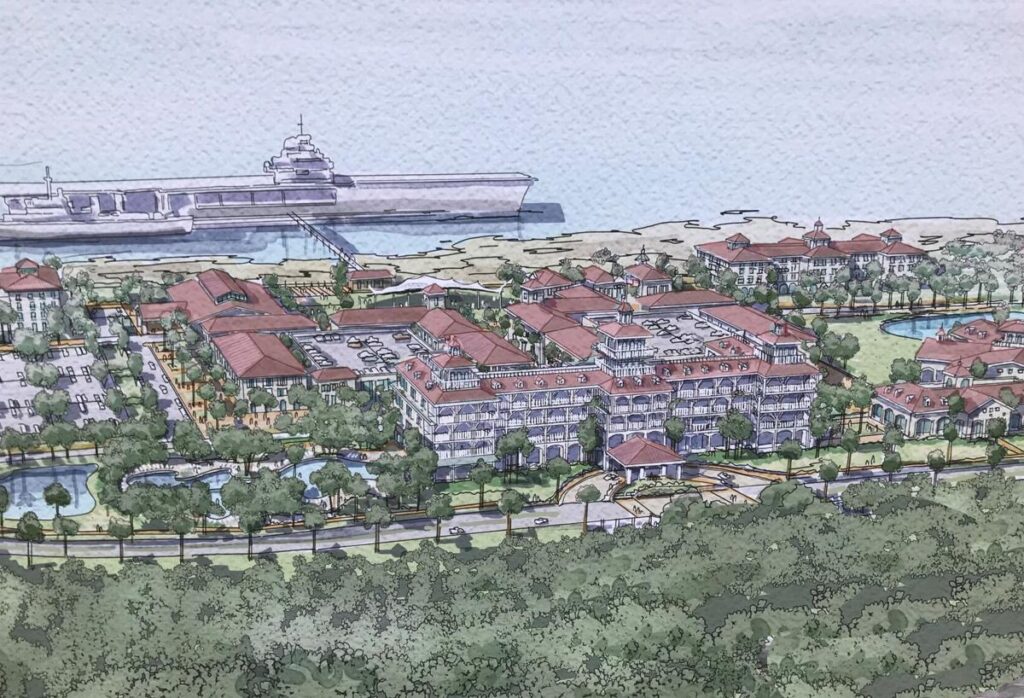
- The land is under a long-term state lease that helps fund the USS Yorktown and the Patriots Point Naval Museum.
Important: The lease cannot be reversed by the Town. This development is going to happen—the question is how much control the Town and community will have.
It’s true that the developer could wait to build. But doing nothing long-term isn’t a real option: the lease requires activity, and the Naval Museum depends on lease revenue to operate. The property’s location and value make eventual development all but certain.
2. Why Is There a New Plan?
The Town—not the developer—initiated the process to transition from WG-C to a Planned Development District (PDD). We approached the developer because:
- WG-C zoning gives them broad entitlements with little oversight.
- A PDD offers the opportunity to add design standards, protect open space, and secure public access.
- A PDD lets the Town negotiate improvements for the community—things we can’t require under WG-C.
Some people have asked, “Why not just change the zoning?”
Legally, we can’t.
- The developer’s rights are vested under South Carolina law.
- A unilateral zoning change would likely be challenged as spot zoning, and courts have consistently ruled against municipalities in those situations.
3. What’s the Difference Between WG-C and the PDD?
| Feature | WG-C Zoning (Current) | PDD (Proposed) |
| Open Space | 10% minimum | 12% minimum |
| Tree Requirement | 160 caliper inches/acre | 120 caliper inches/acre |
| Height Near Water | Up to 80 feet | Capped at 35 feet |
| Residential Density | 12 units per acre | 8 units per acre |
| Waterfront Walkways | Min. 10’ wide, avg. 40’ from Critical Line | Min. 10’ wide, avg. 40’ from Critical Line |
| Pedestrian Connections | 30’ open area / 8’ path | 20’ open area / 8’ path |
| Critical Line Buffer | Avg. 35’, min. 20’ | Avg. 35’, min. 20’ |
| Design Standards | Flat roofs prohibited; no stucco as primary material | Flat roofs prohibited (with some false gables); stucco allowed as primary material |
| Parking Standards | ULI study + residential 1.5–2 spaces | Same as WG-C |
| Infrastructure Investment | Developer-only improvements | Developer-only improvements |
The PDD locks in community benefits. WG-C does not.
Also important: The funding under the PDD is not part of the Patriots Point Tourism Development Fee. That fee was created through a different process without the same level of public transparency. The PDD’s local sales fee is applied only at this site, and revenues are dedicated to infrastructure with oversight.
According to the Town of Mount Pleasant’s economic and fiscal impact analysis, the project is expected to generate a regional economic impact of approximately $875 million.
4. What Happens If We Say No to the PDD?
- The developer can still build under WG-C.
- That means higher buildings, more residential units, and fewer public controls.
- We lose the opportunity to secure green space, view corridors, trails, and better design.
5. Here’s the Bottom Line
- The PDD was initiated by the Town to ensure more predictability and public benefit.
- It offers lower density, lower height, more green space, and shared infrastructure funding.
- It supports the Patriots Point Museum by keeping the lease in good standing.
- And most importantly: It gives us more control.
No matter how you feel about growth, these are the facts.
You decide what’s best—but let’s base it on what’s real, not what we wish were true.


Are these going to be condos or apartments, or both?
We are not 100% sure at this point but most likely condos.
John, thank you for your detailed clarification of the PPD. It has helped me, and I’m sure many others, if they took the time to read it, get a clearer picture of who has ultimate control of this vast project.
You’re welcome, thank you for being engaged. John
Thank you Dan for being engaged and taking the time to read into this. John